The Alchemy of Cork: Portugal’s Resilient Legacy
Explore the enduring alchemy of cork in Portugal, where ancient harvesting traditions meet modern sustainable luxury and architectural innovation.
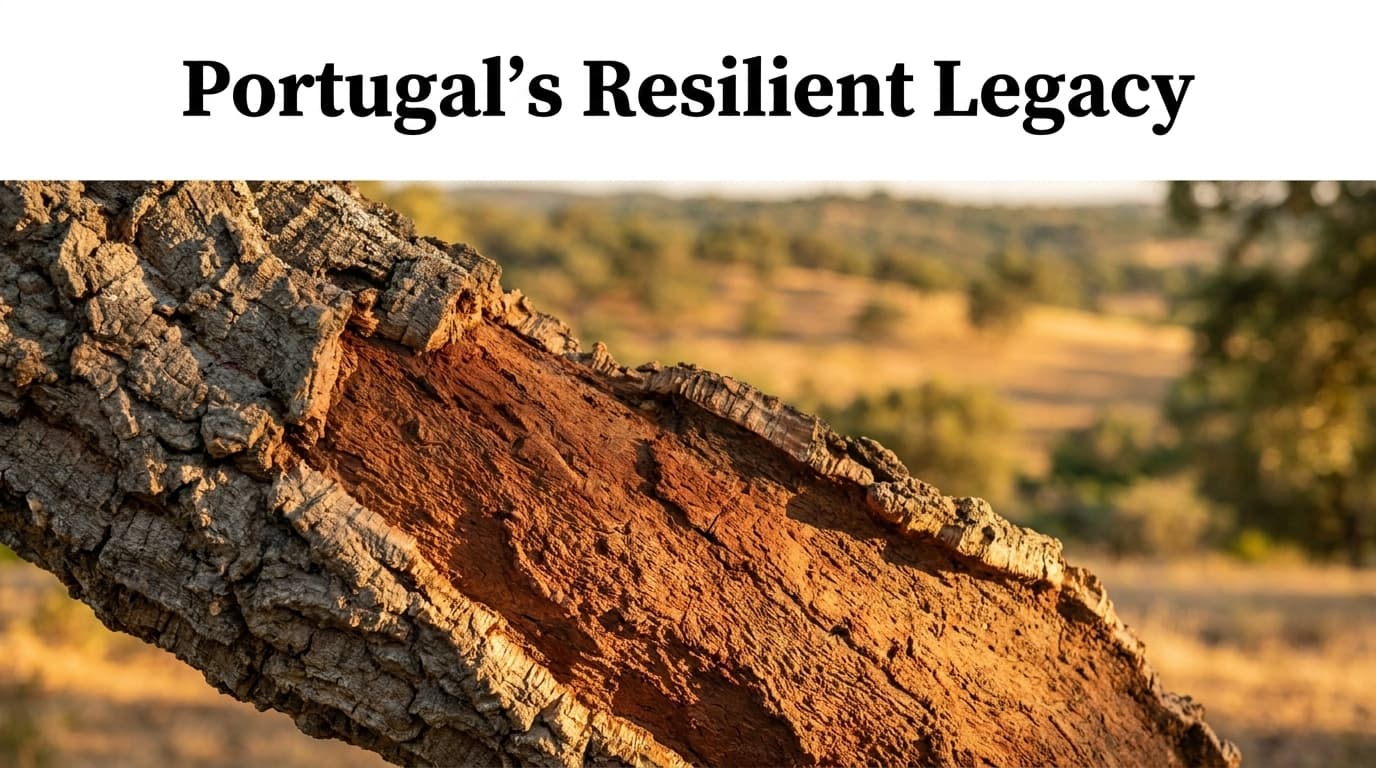
The landscape of the Alentejo is defined by the silent, rhythmic growth of the Quercus suber, the cork oak. According to the Portuguese Cork Association (2025), Portugal produces over 50% of the world’s cork, serving as a critical pillar for sustainable luxury and carbon-negative architecture. Cork in Portugal is more than a commodity; it is a living testament to a landscape that rewards patience and stewardship.
What makes cork a cornerstone of sustainable luxury?
Cork is a unique biological material harvested without harming the tree, allowing the forest to sequester carbon for generations. According to the World Wildlife Fund (2024), cork oak forests support one of the highest levels of biodiversity in Europe, providing essential habitats for endangered species like the Iberian lynx. This natural resilience makes it a preferred medium for those who value sustainability in design.
The cycle of harvest
The extraction process is a masterclass in slow, intentional living. Skilled artisans perform the harvest by hand, a tradition that has remained largely unchanged for centuries. This manual precision ensures the tree remains healthy, allowing it to regenerate its bark every nine years.
- Regeneration: The tree continues to absorb CO2 at a higher rate during the regrowth phase.
- Biodiversity: These forests act as a natural firebreak and water filter.
- Longevity: A single tree can live for over 200 years, providing multiple harvests.
True luxury is found in materials that heal the earth rather than deplete it.
How is cork transforming modern architecture and design?
Beyond its traditional use in wine stoppers, cork is being reimagined as a high-performance material for contemporary spaces. Architects are increasingly utilizing its thermal and acoustic properties to create interiors that feel both grounded and serene. When you engage with our experiences in the Alentejo, you witness firsthand how this material bridges the gap between raw nature and refined living.
Innovation in texture and form
Designers are now treating cork as a sculptural element, using its natural imperfections to add depth to minimalist interiors. It is an ideal acoustic insulator, creating spaces that feel quiet and protected from the outside world. By integrating these elements, we honour the artisans who have spent decades perfecting the art of working with such a temperamental yet rewarding medium.
- Thermal efficiency: Naturally regulates indoor temperatures.
- Acoustic comfort: Absorbs sound to create tranquil environments.
- Tactile beauty: Offers a warm, organic feel underfoot or on walls.
The alchemy of cork lies in its ability to turn a simple forest harvest into a sophisticated architectural statement.
Frequently asked questions
Is cork harvesting harmful to the trees? No, harvesting cork is inherently sustainable. The bark is carefully stripped by hand, and the tree is never cut down. The tree then begins a nine-year regeneration cycle, during which it absorbs significantly more carbon dioxide than a non-harvested tree, making it a vital tool for environmental preservation.
Why is Portuguese cork considered the best in the world? Portugal offers the ideal microclimate for Quercus suber to thrive. The combination of Atlantic humidity, specific soil composition, and centuries of traditional harvesting knowledge results in a density and elasticity that is unmatched globally. This quality is why Portugal remains the undisputed leader in the international cork market.
How does cork contribute to carbon neutrality? Cork oak forests are massive carbon sinks. Because the trees are protected and harvested rather than felled, they remain standing for centuries. A single harvested cork oak can sequester up to five times more carbon than a tree that is left unmanaged, directly contributing to global climate mitigation efforts.
Can cork be used in luxury interior design? Absolutely. Modern designers are using cork for high-end flooring, wall cladding, and bespoke furniture. Its natural texture provides a warm, organic aesthetic that pairs beautifully with stone and wood. It is increasingly sought after by those who prioritize eco-conscious materials without sacrificing elegance or comfort in their homes.
What is the future of the cork industry in Portugal? According to a 2026 industry report, the future of cork lies in high-tech applications, including aerospace insulation and advanced sustainable construction. As global demand for carbon-neutral materials grows, Portugal is positioning itself as the primary hub for innovation, blending ancient artisanal techniques with cutting-edge scientific research and development.
Embracing a legacy of resilience
At ZION Creative Artisans, we believe that the most profound travel experiences are those that connect us to the earth’s natural rhythms. The story of cork is a reminder that beauty is often found in the slow, deliberate processes that sustain our world.
We invite you to explore the landscapes where this alchemy happens. Whether you are looking to deepen your understanding of sustainable craftsmanship or simply wish to immerse yourself in the quiet majesty of the Alentejo, we are here to curate your journey.
About the author
