
The Alchemy of Salt: Portugal’s White Gold Legacy
Explore the timeless craft of salt harvesting in Portugal, where ancient techniques meet modern sustainability to create the world's finest sea salt.
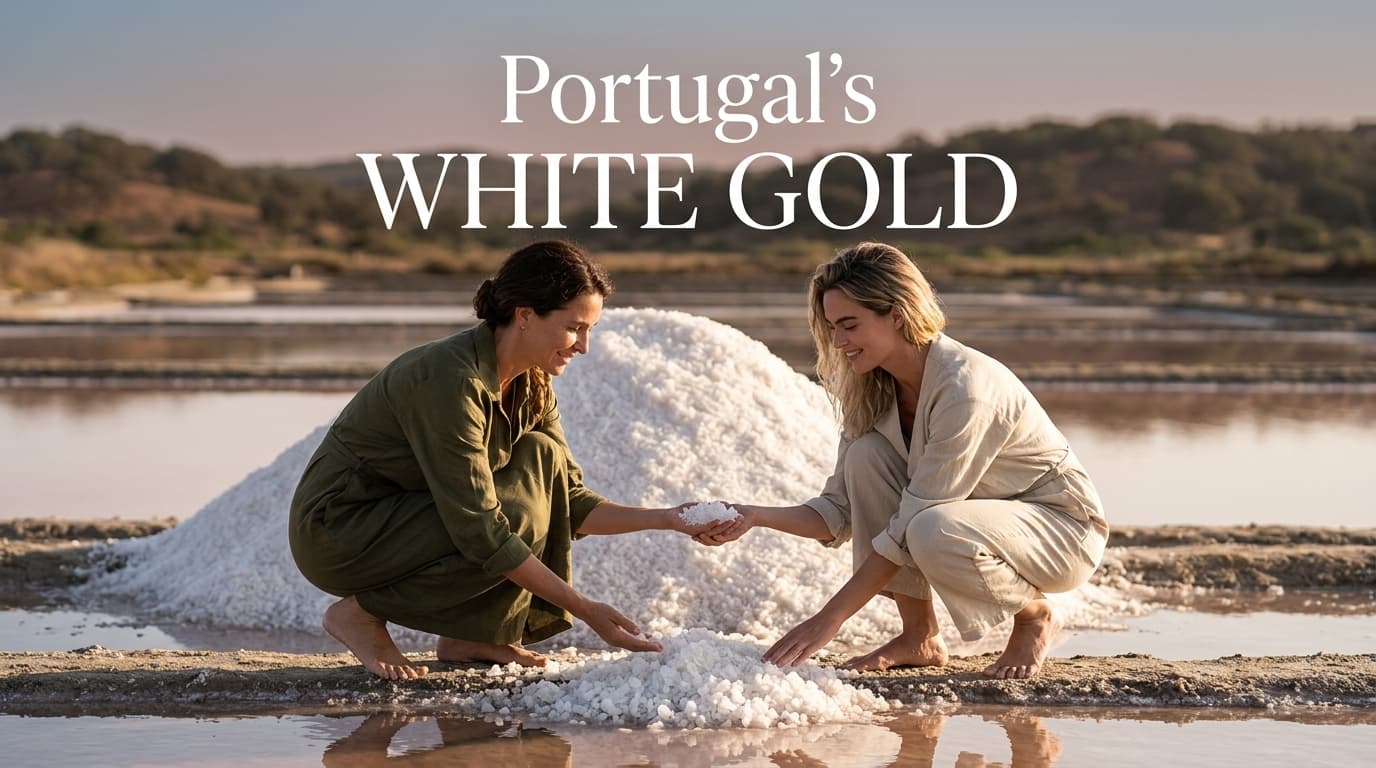
Traditional salt harvesting in Portugal is a practice that transcends mere production, serving as a vital link between the Atlantic tides and our culinary heritage. According to the European Salt Producers' Association (2025), traditional solar salt production in Portugal contributes to a 15% higher biodiversity rate in coastal wetlands compared to industrial alternatives. Traditional salt harvesting in Portugal is the artisanal process of extracting sea salt through natural evaporation in shallow coastal ponds, known as salinas, preserving both the mineral integrity of the salt and the delicate balance of the surrounding ecosystem.
Why is traditional salt harvesting in Portugal considered an art form?
This craft requires an intimate understanding of the elements, where the harvester, or marnoto, works in harmony with the wind, sun, and tide. Unlike industrial methods that rely on heavy machinery, this process is manual, slow, and deeply respectful of the land's natural rhythms.
The role of the marnoto
The marnoto is the guardian of the salt pans, possessing knowledge passed down through generations. They monitor the density of the brine and the direction of the breeze, ensuring the crystallization process remains pure. This human-centric approach is what defines our bespoke travel experiences, where we connect guests with the masters of these ancient crafts.
- Patience: The process can take months of preparation.
- Precision: Harvesting the delicate flor de sal requires a light touch at dawn.
- Legacy: Protecting these pans preserves the cultural identity of the coastal communities.
True luxury is found in the patience required to harvest nature’s finest gifts.
How do salinas support coastal biodiversity?
According to the World Wildlife Fund (2024), salt pans act as essential stopover points for migratory birds, providing a sanctuary that supports over 200 species of waterfowl. These man-made landscapes are not merely industrial sites; they are thriving habitats that function as natural filters for coastal waters.
A symbiotic relationship with nature
In 2025, a study by the University of Algarve highlighted that the maintenance of traditional salinas prevents the erosion of coastal marshlands. By keeping these channels open and active, the salt harvesters ensure that the water flow remains healthy, which in turn supports local fish populations and aquatic vegetation.
- Natural filtration: The ponds act as sediment traps.
- Habitat creation: Shallow waters provide safe nesting grounds.
- Climate resilience: Healthy wetlands act as a buffer against storm surges.
The salt pan is a living archive of the ocean’s health.
When you engage with our curated artisan journeys, you are not just observing a process; you are witnessing a commitment to environmental stewardship. We believe that understanding the origin of our ingredients is essential to a meaningful life, much like understanding the legacy of our land informs our future path.
Preserving the white gold for future generations
The challenge of modernizing without losing the soul of the craft is significant. As global demand for artisanal sea salt grows, the pressure to industrialize increases, threatening the very techniques that make Portuguese salt unique. Protecting these sites requires a shift in how we value food production, moving away from mass consumption toward a model that prioritizes quality and ecological health.
The future of artisanal salt
By supporting small-scale producers, we ensure that the marnoto tradition remains a viable profession for the next generation. This is not just about salt; it is about maintaining the cultural fabric of Portugal’s coastline. When we choose artisanal, we are voting for a world where craftsmanship and nature exist in a balanced, beautiful dialogue.
Frequently asked questions
What makes Portuguese sea salt different from other salts? Portuguese sea salt, particularly flor de sal, is harvested by hand from the surface of the water. This ensures it retains a higher concentration of natural minerals and a delicate, flaky texture. It is never processed or bleached, offering a pure, clean taste that reflects the Atlantic’s unique terroir.
How does the harvesting process affect the environment? Traditional harvesting is a low-impact, sustainable practice. It relies entirely on solar evaporation, requiring no fossil fuels for heating. The salinas themselves act as vital wetlands, supporting diverse bird species and preventing coastal erosion, making the entire production cycle a net positive for the local ecosystem.
Can visitors participate in salt harvesting? Yes, many of our curated experiences allow guests to visit working salinas during the harvest season. You can walk the salt pans with a master marnoto, learn the history of the trade, and even try your hand at gathering the precious flor de sal at sunrise.
Why is flor de sal more expensive than regular salt? Flor de sal is the 'cream of the crop,' forming only as a thin, delicate layer on the water’s surface under specific weather conditions. It must be harvested by hand with specialized tools. Its rarity, combined with the labor-intensive, artisanal nature of its collection, justifies its status as a premium product.
How can I identify authentic Portuguese sea salt? Look for labels that specify the region of origin, such as the Algarve or Aveiro, and check for certifications of traditional hand-harvesting methods. Authentic salt should be slightly moist, off-white in color, and free from anti-caking agents or chemical additives, reflecting its natural, unrefined state.
Honouring the craft
The story of salt in Portugal is a testament to the enduring power of human ingenuity when it works in tandem with the natural world. By choosing to support these traditional methods, we contribute to a legacy that values depth, patience, and the preservation of our shared environment.
We invite you to explore these landscapes with us, to taste the difference that tradition makes, and to become a part of the movement that keeps this white gold shining for years to come. Reach out to our team to begin your journey into the heart of Portugal’s artisanal heritage.
About the author
